










LATEST NEWS
Undergraduate Programme

B.Com. Information Technology

B.Com. IT
Where business strategy meets digital innovation

The Bachelor of Commerce with Information Technology (B.Com. IT) at KG College of Arts and Science is an interdisciplinary undergraduate programme that integrates core commerce education with key information technology competencies, preparing graduates to manage business processes using modern IT tools and techniques.

To create adaptable experts who can assist firms with their digital transition, the curriculum combines database administration, programming fundamentals, accounting, finance, marketing, and business law. Students gain from industry exposure, hands-on learning, and career-focused mentoring that improves their technological agility and business acumen. Strong industry ties, career assistance, and an academic environment that is prepared for the future enable B.Com. IT graduates are to become digitally savvy business professionals who can propel efficiency and innovation in the corporate sector

Programme Overview

Programme Type
Undergraduate
Total Duration
3 Years (6 Semesters)
Department
Department of Commerce with Information Technology
Programme Status
Autonomous (Affiliated to Bharathiar University)
Credits Required
140 Credits (Choice-Based Credit System)
Core Courses
20 Papers (15 Theory Papers and 5 Practical / Application-oriented Papers)
Elective Courses
2 Papers (Discipline-Specific Electives)
Ability Enhancement Courses
4 Papers (3 Ability Enhancement Compulsory Courses and 1 Online / MOOC Course)

Campus Placements

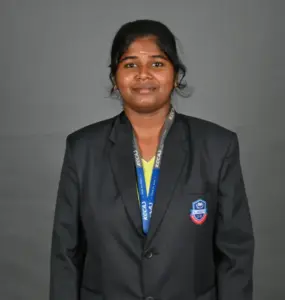
Anandhi H

GEP WORLDWIDE

Process Associate

₹ 2.25 LPA

B.Com IT 2026
View →

Why B.Com. IT at KGCAS?

Industry-Embedded Curriculum Design
Structured in alignment with professional accounting standards and evolving regulatory frameworks to mirror real-time industry expectations and compliance practices.

Practice-Oriented Learning Ecosystem
Delivered through case simulations, audit exercises, live financial analysis projects, and structured industry interaction to ensure application-driven mastery.

FinTech & Digital Accounting Integration
Integrated exposure to accounting software, ERP systems, data analytics tools, and technology-enabled financial reporting environments.

Certification-Linked Academic Pathways
Curriculum mapped to support progression towards leading professional qualifications, enhancing competitive readiness and credential value.

Structured Career Acceleration Framework
Strengthened by dedicated mentoring, industry networking platforms, internship pipelines, and proactive placement support through the KGCAS placement cell.

An Innovative Way to Graduate at KGCAS

An innovative pathway into the world of commerce, information systems, and IT applications through KGCAS’ distinctive experiential learning approach:

Flipped classroom
Hands-on coding
Hackathons & challenges
Case-study learning
EPIC evaluation model

PEOs | PSOs | POs

Programme Educational Objectives

PEO1

Students will be able to understand the concepts of commerce.

PEO2

Programme aims to develop comprehensive professional skills that are required for commerce graduates.

PEO3

Students will develop an understanding of various commerce functions such as finance, accounting, financial analysis, project evaluation, and cost accounting.

PEO4

Students will be able to demonstrate proficiency by passing exams such as C.A, C.S, and CMA.

PEO5

Students can do commerce-oriented research, and as a consequence of this, they can become Professors in Colleges and Universities.

Programme Specific Outcomes

PSO1

Image link

The students should possess the knowledge, skills, and attitudes at the end of the degree course.

PSO2

Image link

Apply the current techniques, skills, and tools necessary for computing practices. By virtue of the training, they can become an Manager, Accountant, Management Accountant, Cost Accountant, Bank Manager, Auditor, Company Secretary, Professor, Stock Agent, or Government job.

PSO3

Image link

They can also understand, analyze, and develop software programmes in the areas related to web design, application programming, database, and networking for efficient design of technology of varying complexity.

Programme Outcomes

PO1

This programme gives a deeper understanding of both IT and Commerce, thereby enabling the budding graduates to pursue careers in either of the two fast-growing areas, viz. IT Industry, Commerce, and Financial sector.

PO2

Demonstrate professional ethics in the social and legal aspects of commerce.

PO3

The graduates will get hands-on experience in various aspects of information technology, viz., web designers, programme developers, software testing, BPO, and KPO.

Curriculum Overview

The curriculum follows the Choice-Based Credit System (CBCS) and is structured to promote conceptual clarity, technical proficiency, and experiential learning. It emphasizes application-oriented education through a blend of theory, practical sessions, and project-based assessments.

Core Curriculum
Year I
Financial Accounting I (Core)
Financial Accounting– II(Core)
Fintech and Digital Finance Innovation(Core)
Business Organization and Management
Financial Modeling in Excel Lab
Computer Fundamentals and Information Systems (Allied)
Business Law(Allied)
Tally with GST lab
Year II
Corporate Accounting – I (Core)
Database Management System (Allied)
Data Analytics for Finance (Core)
Company Law (Allied)
Company Law and Secretarial Practice (Core)
Corporate Accounting– II (Core)
Python Programming with Financial Applications (Core)
Advanced Applications of Data Analytics in Fintech (Core)
Business Mathematics and Statistics (Allied)
Year III
Cost Accounting (Core)
Banking Theory, Law and Practice (Core)
Income Tax Law and Practice (Core)
Indirect Taxes (Core)
Management Accounting (Core)
Principles of Auditing (Core)
Executive Business Communication (Core)
Additional Programme Components
Elective Courses

Discipline-focused technology-oriented electives

Elective I Course
Software Engineering
Technology Management
Network Management
Elective II Course
Software Testing
Cyber Security
Net Digital Banking
Skill Enhancement Courses

Practical and application-oriented skill development

Oracle
Python Programming with Financial Applications
Web Technology – Lab
Internships / Projects

Industry exposure and experiential learning opportunities

Become Software Engineer

Graduates of the B.Com. IT programme are equipped for roles across corporate, financial, and technology-driven sectors. Placement training, internships, and industry interactions support successful career progression and professional growth.

Career Opportunities
Data Analyst
Digital Marketer
Business Analyst
Systems AnalystWeb Producer
UX/UI Designer
Accountant
Financial Analyst
Auditor
Banking & Insurance Professional
Tax Consultant
Investment Analyst
Entrepreneur / Startup Founder
Supply Chain Executive
Digital Marketing Executive (Commerce domain)
Professional Certifications
Mainstream professional pathways
CA

Chartered Accountancy

CMA

Cost and Management Accountancy

CS

Company Secretary

International professional pathways
ACCA

Association of Chartered Certified Accountants

CFA

Chartered Financial Analyst

Higher Studies
M.Com.
MBA (Finance / Marketing / HR)

Eligibility and Admission

Candidates who have completed Higher Secondary Education (10+2) in Commerce or equivalent streams are eligible to apply. Admissions are offered based on institutional norms and merit guidelines.

Check-list of enclosures with application

Statement of Marks of the Qualifying examinations (Original and 3 attested Photo copies).
Provisional Degree Certificate (Original and 3 attested Photo copies) (for PG/Research Admissions only).
Course Completion Certificate (Original and 3 attested Photo copies) (for PG/Research Admissions only).
Transfer Certificate (Original and 3 attested Photo copies).
Passport size and stamp size Photographs each 3 Nos.
Aadhar Card attested Photo copies - 3 Nos.
Community Certificate (Original and 3 attested Photo copies)
Eligibility Certificate from the Bharathiar University.